1940's Tissot Watch
Tissot
Stainless steel
1940's
Manual wind
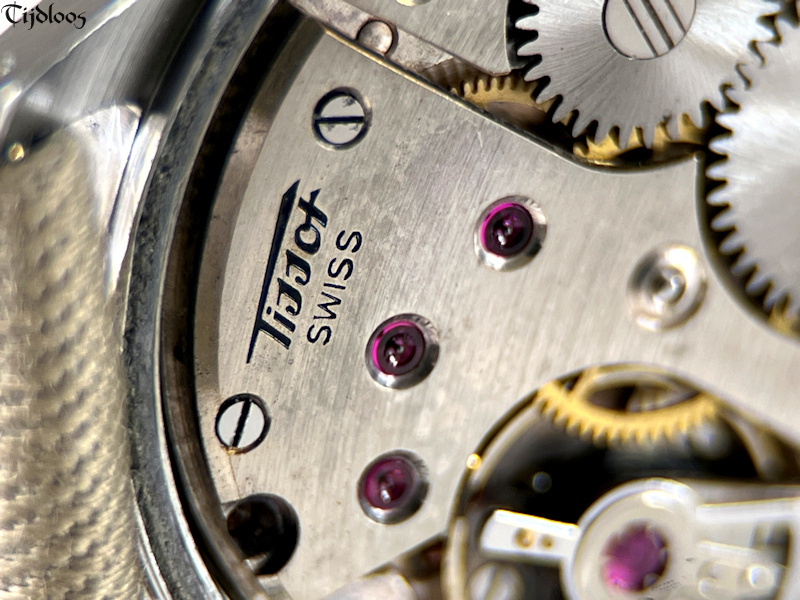
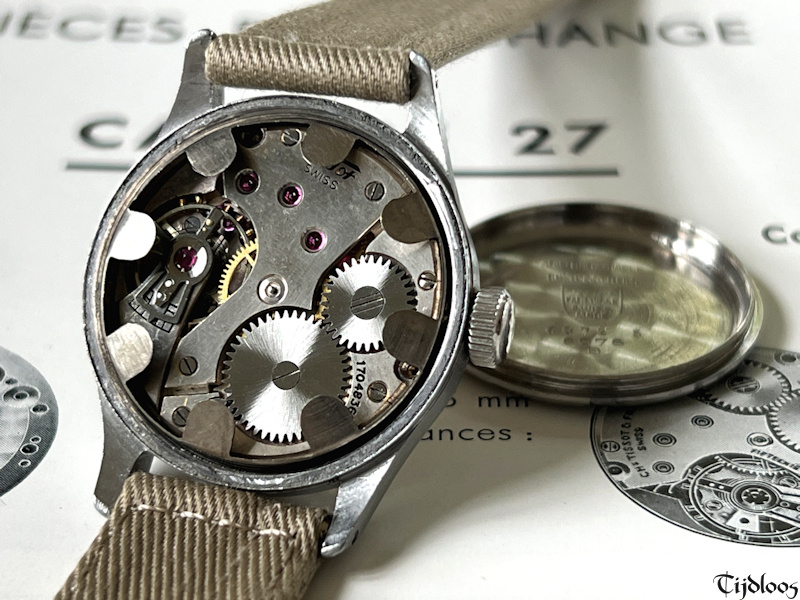
15 Jewels
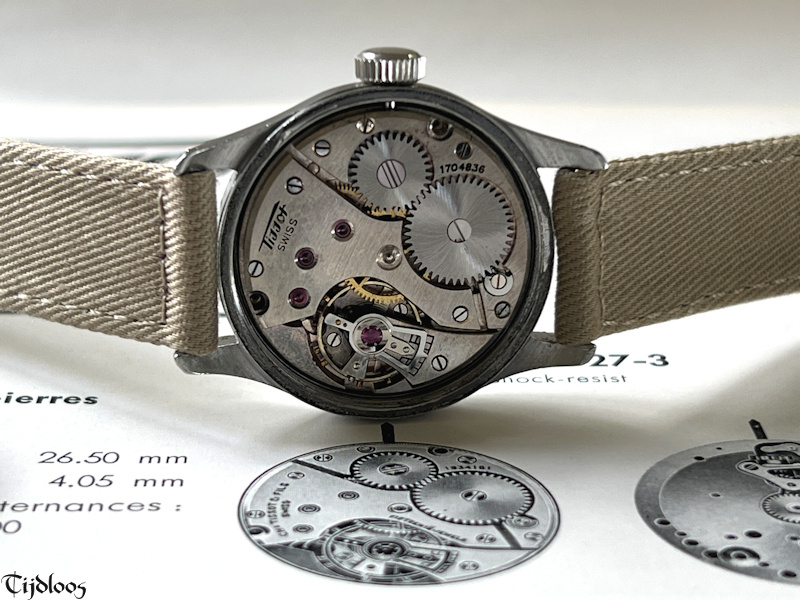
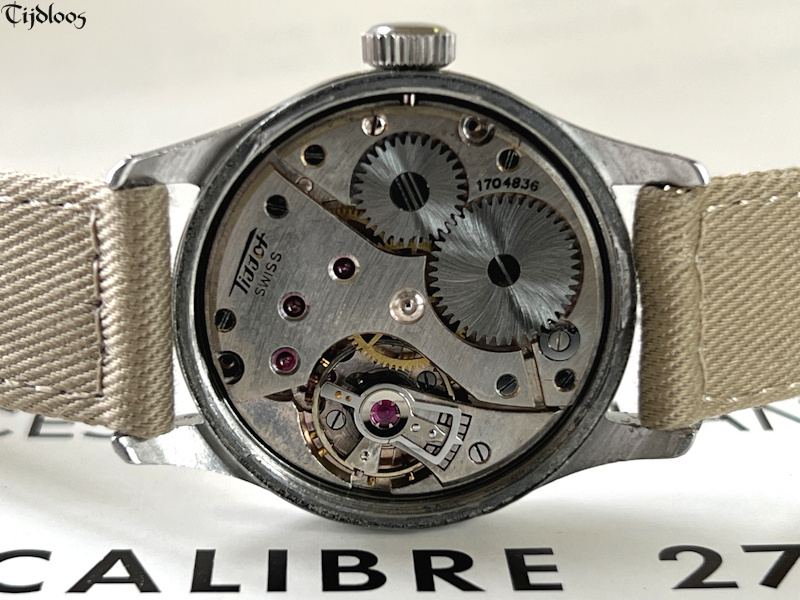
Movement cal. 27-3
Swiss made
Ø ± 30 mm
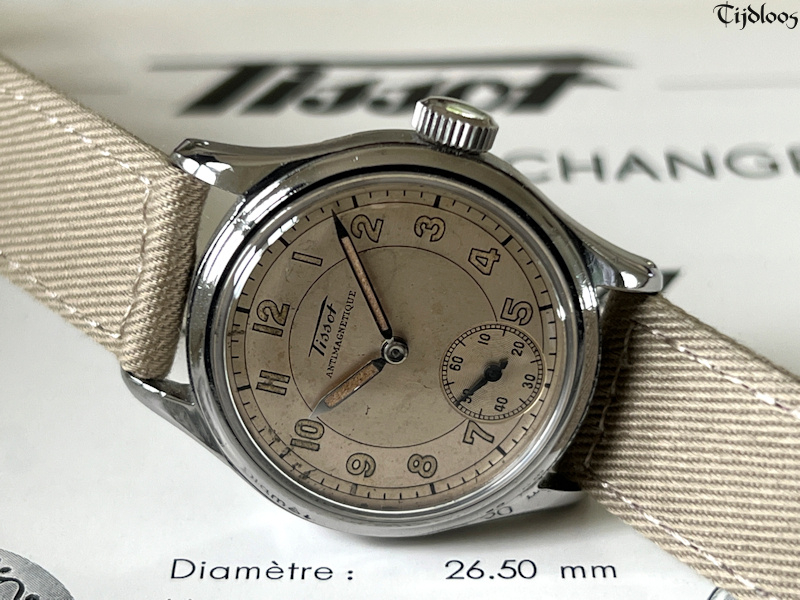
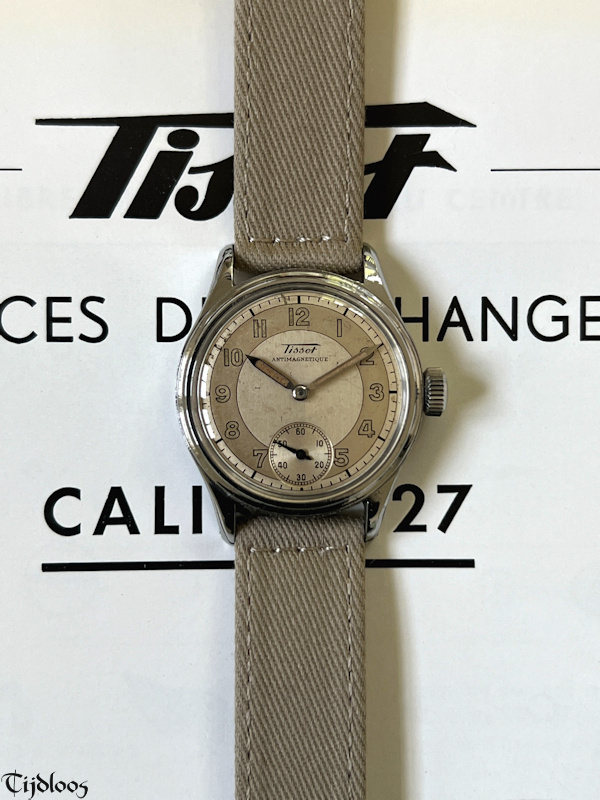
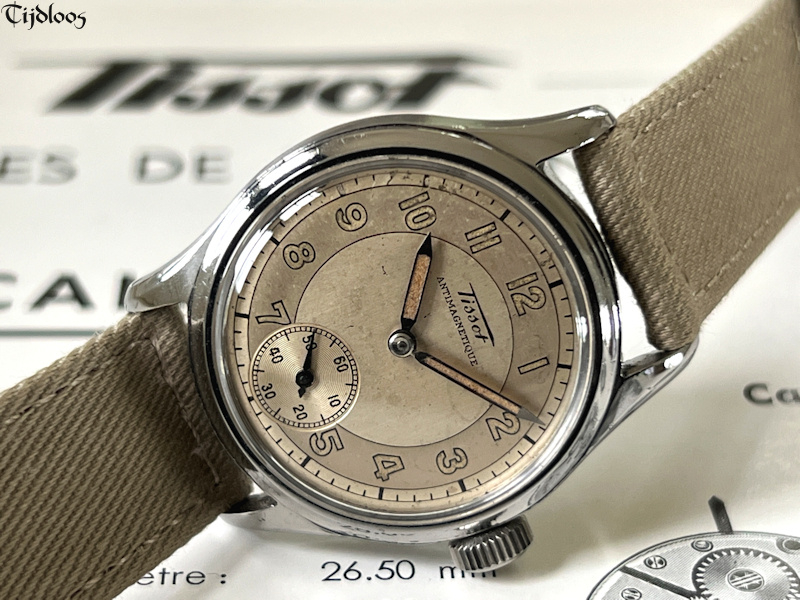
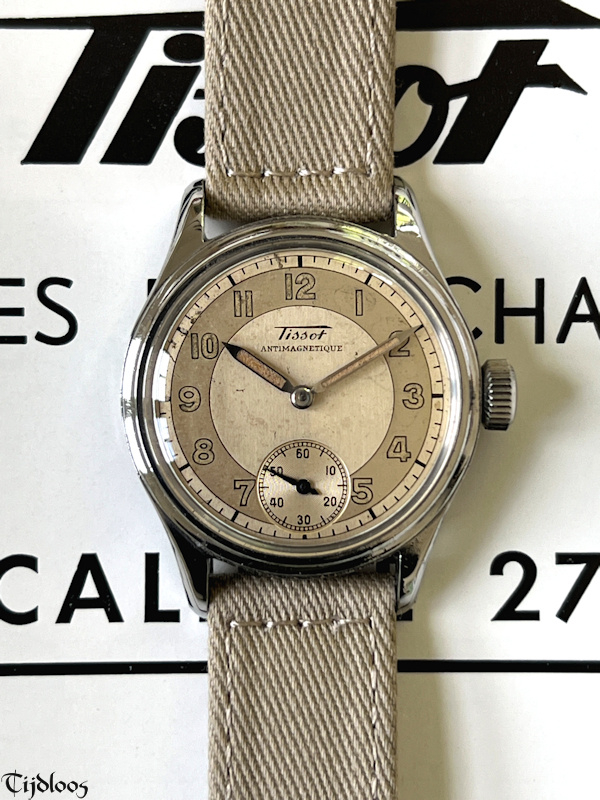
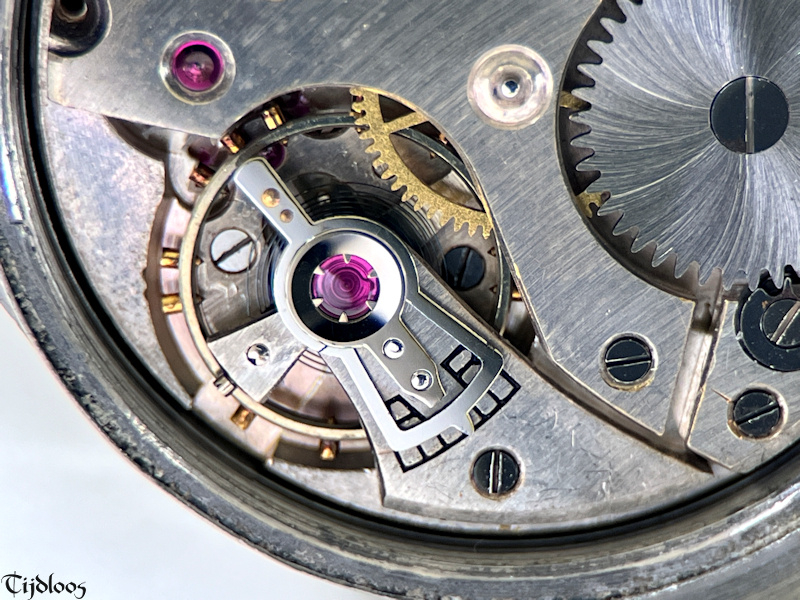
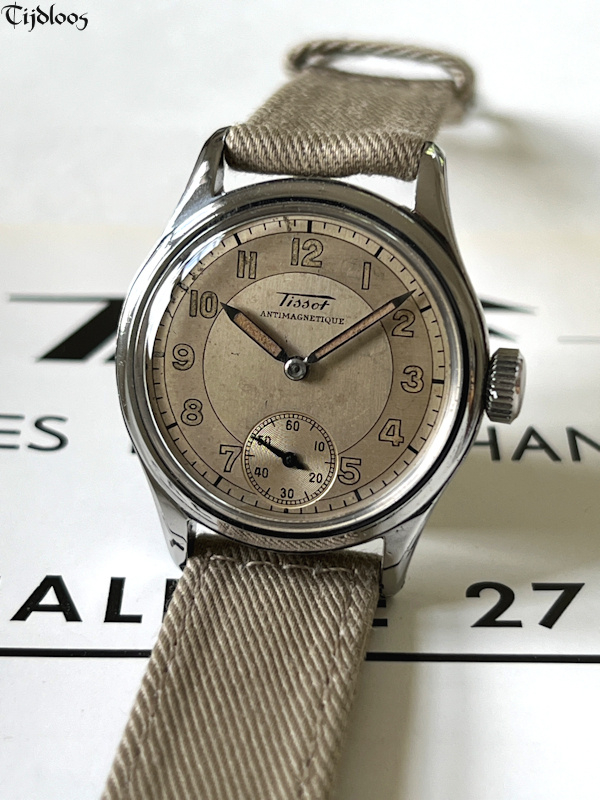
Chs. Tissot & Fils was founded in Le Locle, in the Jura region of Switzerland, in 1853. It was run by father and son, Charles-Félicien Tissot and Charles-Émile Tissot. Like most Swiss watch companies of the era, Tissot started out as an assembler, bringing together parts made by specialist manufacturers from around the region. Fast-forward a few decades, and this 1940s Tissot ticks an awful lot of boxes. The in-house Tissot Caliber 27 series was introduced in 1936, with the 27-3 variant arriving in 1940. It’s a handsome, reliable Swiss manual-winding movement with shock resistance and subsidiary seconds. In other words, a rather serious bit of engineering hiding behind a very charming face. And what a face it is. The original two-tone dial looks fantastic. There is something about a sub second display that gives a watch an almost unfair amount of charm.
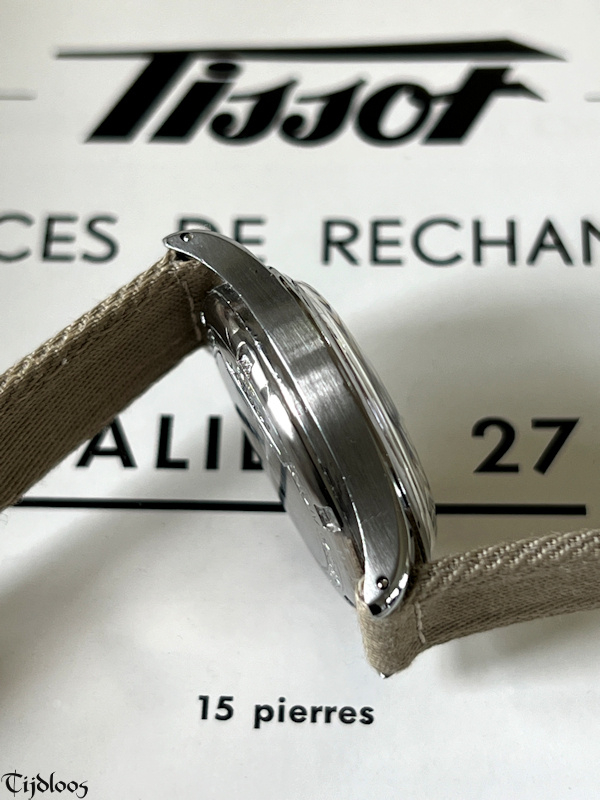
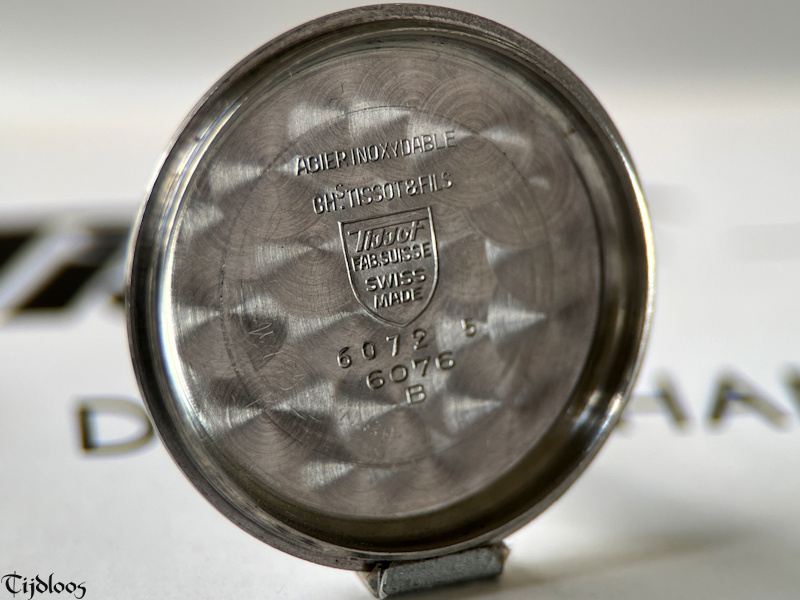
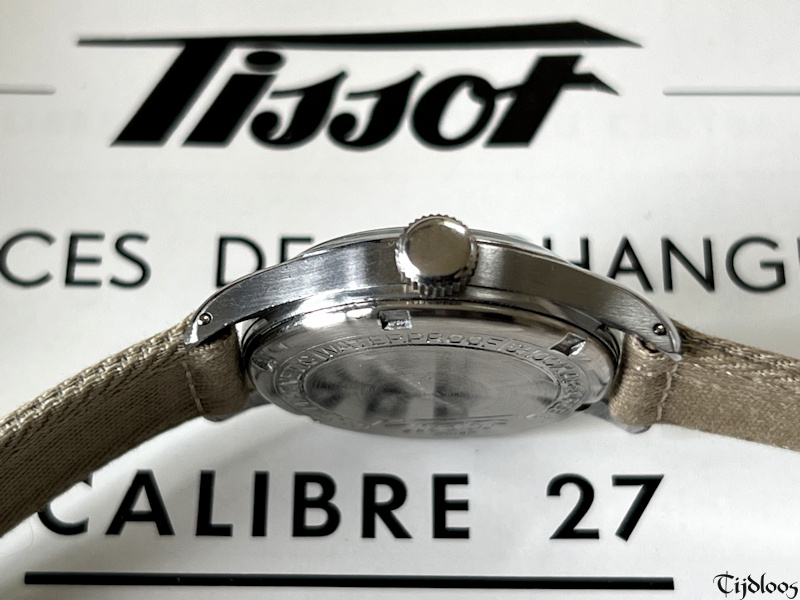
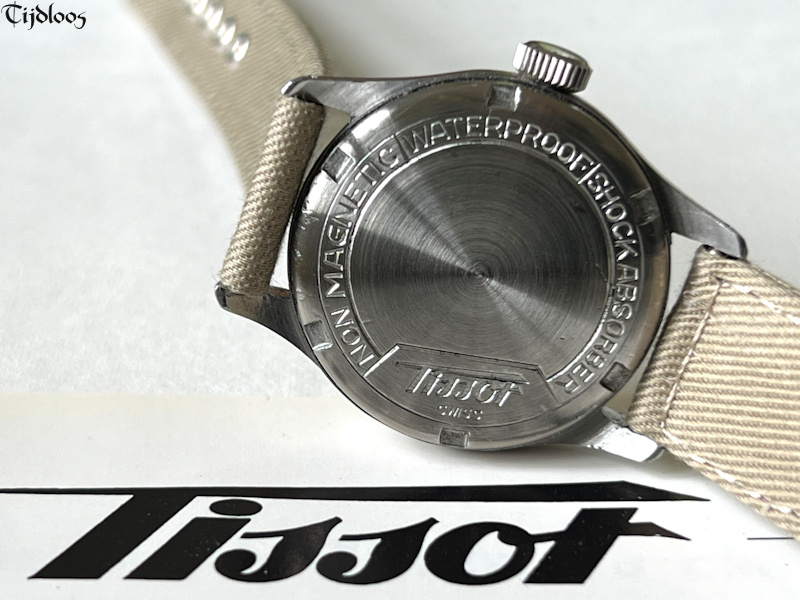
Under Tissot it reads Antimagnétique/Anti-Magnetic which is something you will really appreciate especially with all the magnetism lurking around us nowadays. Its astonishing medal pieces don’t stick to us in the passing. I mean who would enter a hardware store, and leave wearing half of its contents, imagine the carnage that might cause. The glossy silver hour and minute hands are filled with lume, as are the numerals, while the stainless-steel case combines brushed sides with glossy surfaces. And then there’s the wonderfully named “Sei Tacche”, Italian for “six notches”, referring to the distinctive six-notch case back.
The back is marked Non Magnetic, Waterproof, Shock Absorber. About that “Waterproof” claim, please don’t test it.
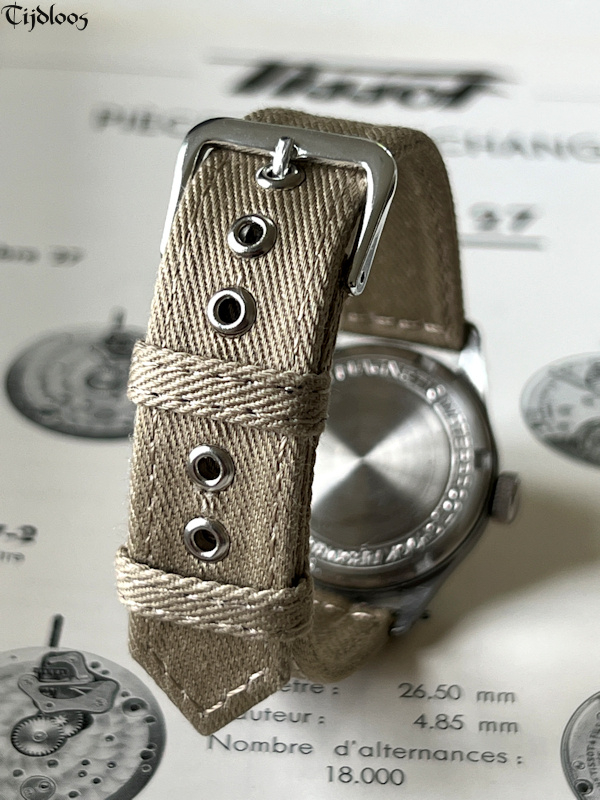
Vintage watchmakers and swimming pools are not natural allies, and water getting inside the watch could cause irreversible damage. “Waterproof” was a rather more optimistic concept back then. The original crown is nice and chunky and winds easily, offering plenty of grip. No dainty little fingernail gymnastics required. We paired it up with a cotton canvas strap, and, rather surprisingly, it works beautifully.
A lovely piece of Swiss watchmaking from an era when watches were built to be worn, used, not merely photographed next to an espresso.


 06 - 51222134